The Non-Scale Victory No One Talks About: Healing Your Relationship With Food
Search “non-scale victories” and you’ll get the same list, over and over. Looser pants. More energy. Better sleep. No seatbelt extender needed on the plane. They’re framed as proof you’re winning at weight loss, even when the scale won’t cooperate.
Here’s what’s missing from every one of those lists: the moment food stops being the enemy.
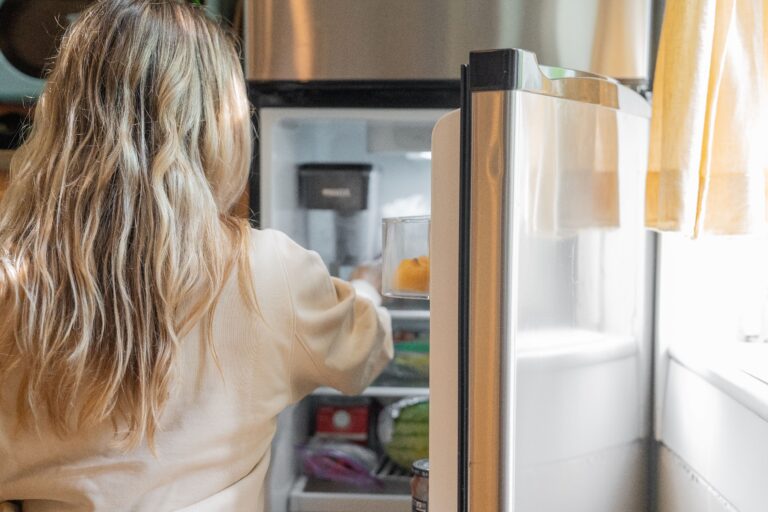
Not a smaller pant size. Not a lower number anywhere. The actual, quiet, life-changing shift of eating a slice of birthday cake without a mental spreadsheet running in the background. Ordering what you want off a menu without scanning for the “safest” option first. Having leftovers in the fridge and not thinking about them until you’re hungry again.
That’s the victory nobody’s writing listicles about, because it doesn’t photograph well and it doesn’t fit the before-and-after format. But if you’ve ever white-knuckled your way through a meal, or spent more mental energy on food rules than on the food itself, you already know it might be the biggest one there is.
What a Healthy Relationship With Food Actually Means
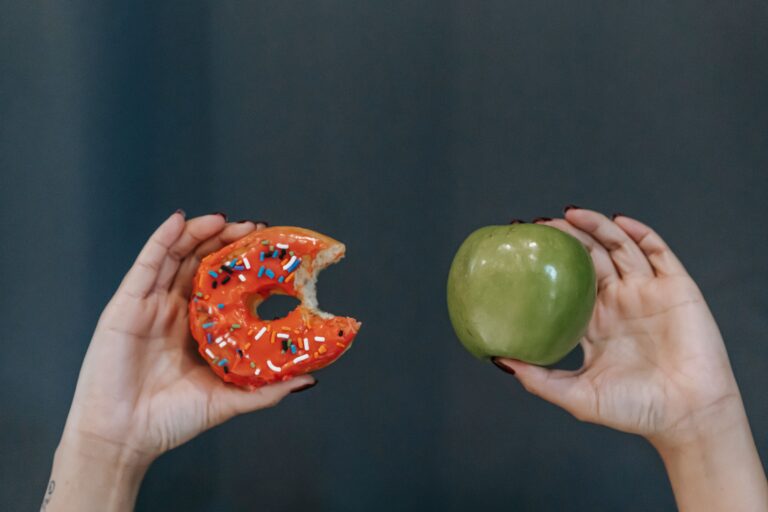
A healthy relationship with food isn’t a specific way of eating. It’s the absence of a mental battle around it, no rules running in the background, no food sorted into “good” and “bad,” no guilt trailing behind a meal after it’s over. That’s a different goal than most food advice is built around, and it’s exactly the one most non-scale victory content skips.
Why This One Gets Skipped
Most non-scale victory content still measures success by proximity to weight loss. Energy and sleep and clothes fitting differently, they’re framed as evidence the “real” goal (a smaller body) is working, even when nobody says that directly. It’s weight loss wearing a different outfit.
Mental freedom around food doesn’t fit that frame, because it isn’t in service of anything else. It’s not a sign you’re “doing well” on a plan. It’s the plan not being the point anymore.
That’s a genuinely different kind of progress, and it’s worth naming on its own, not as a footnote under “also, you might feel better too.”
What This Actually Looks Like
It rarely arrives as one big moment. More often, it’s a series of small, almost boring shifts:
- Eating when you’re hungry without needing to “earn” it first
- Not mentally re-litigating a meal after it’s over
- Saying yes to dessert because you want it, not because you’re “allowing” yourself a treat
- Going a whole day without doing food math in your head
- Feeling full and just… stopping, without guilt trailing behind it
None of these show up on a scale. None of them make a great before-and-after photo. But ask anyone who’s actually lived through years of restriction, and they’ll tell you these are the moments that mean the relationship has actually changed, not just the behavior around it.
Why It’s Worth Naming as Its Own Win
If food anxiety has been part of your life for a while, it can be genuinely disorienting when it starts to loosen. You might not trust it at first. You might catch yourself waiting for the other shoe to drop, for the “old rules” to come back and remind you they’re still in charge.
That disorientation makes sense. If restriction and food guilt have organized your days for years, their absence can feel like something’s missing, even though what’s actually missing is the noise. Recognizing that as a real, valid milestone, not just an absence of a problem, matters. It gives you something to actually hold onto, instead of just quietly hoping it sticks.
This Doesn’t Happen by Accident
To be honest about it: peace with food isn’t usually something willpower produces. It tends to come from actually understanding your body’s signals again, sometimes described as intuitive eating, and from unlearning rules that got picked up somewhere along the way, whether from a diet, a comment someone made once, or just years of cultural noise about what “good” and “bad” eating looks like.
That unlearning is real work, and it’s genuinely hard to do entirely on your own, mostly because it’s difficult to see your own patterns clearly from the inside. That’s usually where working with a dietitian actually helps, not with another meal plan, but with someone who can help you notice what’s driving the anxiety in the first place and build a different relationship with food from there.
If any of this sounds familiar, that’s worth paying attention to. The absence of food anxiety is a real, measurable kind of progress, even if there’s no number attached to it.
You don’t have to figure this out alone. If this sounds like what you’ve been missing, we’d love to help. Book a call with one of our registered dietitians — most visits are covered by insurance.
About the Author

Marisa W. Smith, MDA, RD, CDCES
Marisa is the founder and CEO of Dietitian Group, an insurance-covered nutrition practice based in Nashville offering both in-person and telehealth visits. She created the THRIVE Method™, the philosophy behind how DG approaches nutrition care — sustainable, non-diet, and built for real life instead of restriction. Marisa’s clinical focus is diabetes management and PCOS, and on this blog she unpacks the thinking behind THRIVE — eating that works in real life, without restriction or perfectionism.
Ready to cut through the noise and actually feel good about what you eat?
Work with a dietitian — covered by insurance — to figure out what actually works for your health.
Or come find us on Instagram @dietitiangroup — we promise we won’t make you feel bad about your cooking oil.