Why We Don’t Talk About “Good” and “Bad” Foods at Dietitian Group
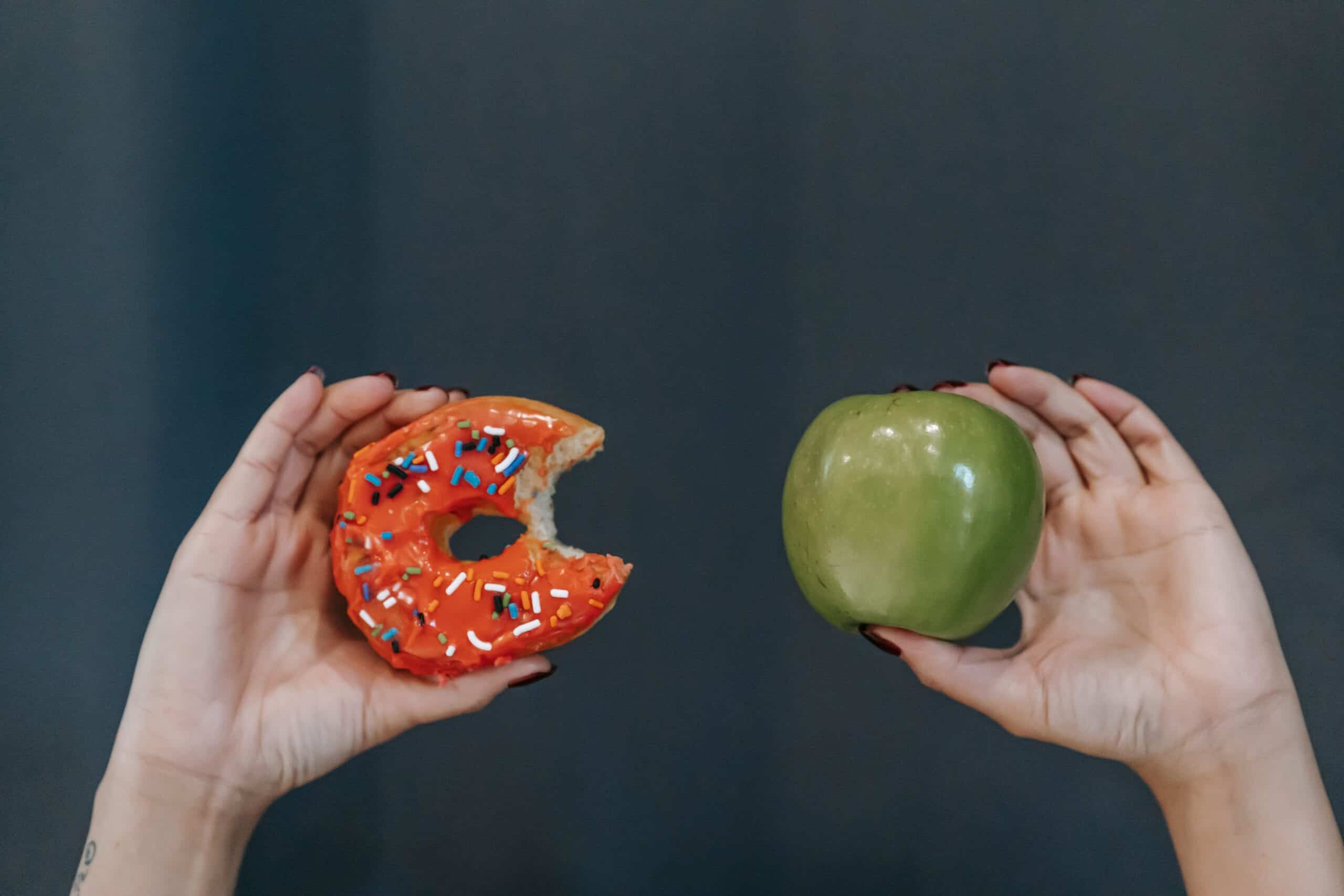
You know the scene. Someone walks into the break room, spots the box of donuts, and says, “I’m gonna be so bad.” Someone else laughs and says, “I really shouldn’t, but—” and just like that, a perfectly normal donut becomes a moral event.
We hear this kind of language everywhere. At work, at parties, and scrolling through social media, we’re constantly taught to sort foods into two categories: good and bad foods. There are the foods we’re “allowed” to eat and the ones we’re supposed to feel a little guilty about.
But labeling foods as good or bad doesn’t just affect how you think about food. It can affect how you eat, how you feel about yourself, and whether you can actually enjoy a meal without a running commentary in your head.
At Dietitian Group, we take a different approach. Food can affect your health without being a measure of whether you were “good” or “bad” today.
“I Was Good on Vacation” Is the Sentence That Breaks Our Hearts
One of the most common things we hear from clients is some version of, “I was really good on my trip.” They say it proudly, like they’re turning in a report card. And honestly? It makes our hearts sink a little.
Not because we want people to overeat and feel awful. That’s not the point. But if you traveled somewhere new, maybe a place you won’t visit again for years, and you spent the whole time turning down food you genuinely wanted to try because you were being “good,” something got lost along the way.
You might not get fiber at every meal on vacation. You might eat things that would never show up on a meal plan. And that’s okay. Because that meal at a tiny restaurant on a side street, the one you’d never be able to recreate at home, that’s part of a full life. And a full life is what good nutrition is supposed to support, not compete with.
What Happens When You Label Foods as Good or Bad
Here’s where it gets interesting from a science perspective. When you mentally label a food as off-limits or “bad,” your brain doesn’t just file that away quietly. It starts paying more attention to that food. You think about it more. You crave it more. And when you eventually eat it (because you will, because it’s a donut and donuts are delicious), you’re more likely to overeat it.
Researchers call this the restriction-rebound cycle. The more rigidly you restrict something, the stronger the pull toward it becomes. So that “bad food” label you thought was keeping you in line? It’s actually creating the exact pattern you were trying to avoid.
Compare that to someone who sees a donut and thinks, “Do I want one right now?” Sometimes the answer is yes, and they eat it and move on. Sometimes the answer is no, not because it’s forbidden, but because they’re genuinely not in the mood. No guilt. No mental tug of war. The donut is just a donut.
Something to notice
Pay attention to the next time you catch yourself saying “I shouldn’t” about a food. Ask yourself: is this coming from what my body actually needs right now, or from a rule I picked up somewhere along the way?
One Meal Doesn’t Define Your Health (and It Never Did)
Judging your nutrition by a single meal is like judging a novel by one page. You might land on a boring chapter. You might land on the climax. Either way, you’re missing the whole story.
Your body doesn’t evaluate food in isolated snapshots. It responds to patterns over weeks and months. A slice of birthday cake at your kid’s party isn’t going to undo months of balanced eating, just like one salad isn’t going to reverse months of not taking care of yourself. The body is playing a much longer game than any single meal.
When you zoom out like this, the pressure drops. You stop trying to “win” every meal and start thinking about the bigger picture: Are you generally eating in a way that gives you energy, feels satisfying, and works with your actual life? That question is a lot more useful than, “Was this food good or bad?”
The Language We Use Around Food Shapes How We Eat
Think about what it really means to sort foods into “good” and “bad” categories. When you say, “I’m being bad” because you’re eating a cookie, you’re not really describing the cookie anymore. You’re describing yourself. You’ve turned a snack into a character judgment.
Over time, that kind of language builds up. It creates this low-level hum of guilt around eating that makes it harder to tune into what your body actually wants and needs. You stop trusting your own hunger cues because you’ve been taught that your appetite can’t be trusted.
That’s why we’re intentional about the language we use at Dietitian Group. We don’t rank foods. We don’t call things “clean” or “guilty pleasures.” We talk about food in terms of what it offers: energy, satisfaction, nourishment, enjoyment, connection. Sometimes a food checks one of those boxes. Sometimes it checks several. All of them count.
A quick swap to try
- Instead of “I was good today,” try “I ate what I wanted and I feel fine.”
- Instead of “That’s a cheat meal,” try “This is just a meal.”
- Instead of “I need to earn this dessert,” try… nothing. You don’t need to earn food. Just eat it if you want it.
Dropping Labels Doesn’t Mean Dropping All Structure
If you’re reading this and thinking, “So you’re saying I should just eat whatever I want all the time?” that’s a fair question. And the answer is: it’s more nuanced than that.
Removing moral labels from food doesn’t mean nutrition information stops mattering. It means you get to use that information as a tool instead of a weapon. You can know that vegetables support your gut health and also eat a piece of pie after dinner without those two facts being in conflict.
What changes is the relationship. Instead of following rules that someone else made up, you start making choices based on how foods make you feel, what sounds good, what your body’s asking for, and what the moment calls for. Sometimes that’s a nutrient-dense meal you prepped on Sunday. Sometimes that’s street tacos at 10 p.m. with friends. Both are valid.
Food Is Supposed to Be Part of Your Life, Not a Test You Pass or Fail
The next time you’re standing in a break room, at a birthday party, or sitting down to a meal on vacation, notice the voice in your head. Is it asking you what sounds good? Or is it grading you?
If it’s the second one, know that you’re not broken. You’ve just been absorbing messages about food for years that were never actually helpful. And you can start unlearning them whenever you’re ready.
If this way of thinking about food feels like a relief, or even just makes you curious, take a look at our THRIVE Method. It’s the framework behind how we work with clients: personalized, flexible, built around your real life, and completely free of food guilt. It might give you a clearer picture of what nutrition support can look like when nobody’s keeping score.
About the Author

DG Clinical Team
Dietitian Group’s Clinical Team is made up of our registered dietitians, each bringing their own area of clinical focus to the table — and a shared commitment to Dietitian Group’s philosophy: judgment-free, non-diet nutrition care that meets patients where they are. This is where our team shares the practical, real-world guidance we wish more people had access to. No fads, no guilt — just trusted nutrition education from the RDs who see patients every day.
Ready to cut through the noise and actually feel good about what you eat?
Work with a dietitian — covered by insurance — to figure out what actually works for your health.
Or come find us on Instagram @dietitiangroup — we promise we won’t make you feel bad about your cooking oil.