My Doctor Told Me to Cut Carbs. Now What?
Early in my career, I worked at a weight loss clinic. The program ran on meal plans, food lists, and weekly weigh-ins, and on paper it worked. People followed the plan, and the numbers moved. Then life happened. Many of them came back having regained the weight, sometimes more, and carrying more guilt and food anxiety than when they started. Worst of all, they were convinced they were the ones who had failed.
That job changed how I practice. It’s a big reason Dietitian Group takes a non-diet, weight-inclusive approach today. It also taught me something I still see with clients every week: the advice you get in a quick medical appointment and the work of healing your relationship with food can feel like they’re pulling you in opposite directions.
Maybe your doctor told you to count carbs, cut out sugar, or lose weight. Maybe you walked out with a handout and a knot in your stomach. You’ve been working hard to stop treating food like the enemy, and now it sounds like you’re being asked to go back to battle.
If that’s you, you’re not doing anything wrong. You’re holding two real truths at the same time. Let’s talk about how to hold them without losing your mind (or your love of pasta).
Why your doctor’s advice and your healing feel like they collide
Let’s start with something important: your doctor is almost certainly trying to help you. Most physicians have a very short appointment window to review labs, adjust medications, screen for complications, and answer your questions. Nutrition gets a few minutes at the end, if that. “Cut back on carbs” and “try to lose some weight” are the fastest, most familiar tools they were trained to reach for.
The problem isn’t bad intentions. It’s that short, simple food rules can land very differently depending on your history with food.
If you’ve spent years dieting, restricting, or feeling out of control around certain foods, a rule like “no more than X carbs” isn’t just information. It can flip a switch. Suddenly bread is “bad,” dessert is a moral failure, and every meal becomes a test you can pass or fail. That mindset tends to backfire. Research links restrictive eating with more cravings, more episodes of eating past fullness, and more stress around meals, and stress itself can push blood sugar higher.
So you end up stuck in a loop:
- You get advice meant to improve your blood sugar.
- The advice feels like a diet, so your brain treats it like one.
- Restriction leads to rebound eating, guilt, and inconsistent meals.
- Your numbers don’t improve the way everyone hoped, and the advice gets stricter.
None of this means the medical goal is wrong. Steadier blood sugar, better insulin sensitivity, and lower long-term risk are worth caring about. It means the way we get there matters just as much as the destination.
How to hold both truths at once
Here’s the reframe I use with clients:
Carbohydrate awareness is a tool. Carb restriction as a moral code is a diet.
You can keep the tool and let go of the code.
Carb counting is a dosing tool, not a report card
If you take mealtime insulin, counting carbs genuinely matters. It’s how you match your dose to your food, and it can actually give you more flexibility, not less. Knowing the carbs in a slice of birthday cake means you can dose for it and enjoy it, instead of skipping it or guessing. This matters even more for people with LADA, or type 1.5 diabetes, whose insulin needs can change over time.
The shift is in how you relate to the number. “This meal has 60 grams of carbs, so I’ll dose accordingly” is information. “This meal has 60 grams of carbs, so I was bad today” is diet culture talking. Same number, completely different experience.
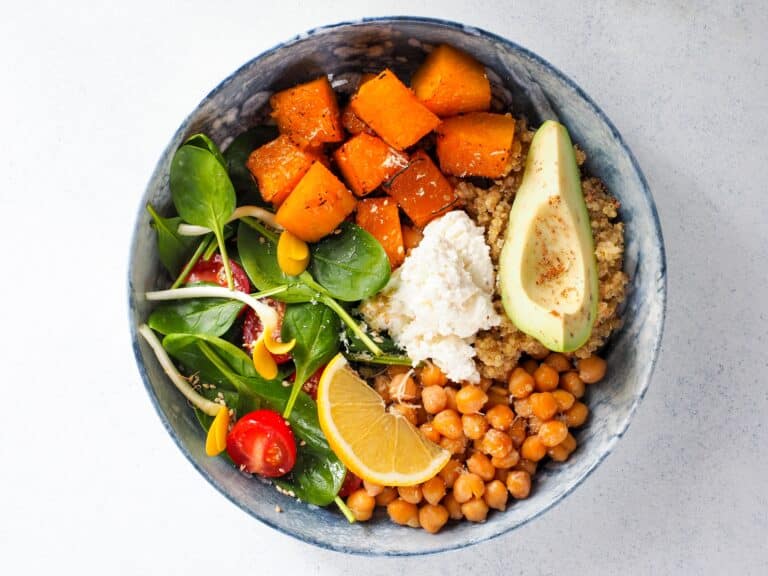
If you don’t use mealtime insulin, you may not need to count at all. Many people do better with a simple, flexible structure like a balanced plate: roughly a third protein, a third carbs, and a third veggies. Another simple option is about 1–1.5 cups of carbs at each meal.
Eat regularly, include carbs you actually enjoy, and pair them with protein, fat, or fiber. That’s gentle nutrition, and it supports blood sugar without making food the enemy.
Let your CGM be curious, not critical
A continuous glucose monitor (CGM) can be one of the best tools for getting out of rule-based eating, if you use it with curiosity. Instead of following a blanket rule, you get to see how your body actually responds.
Try approaching your data like a scientist, not a judge:
- “Interesting, oatmeal alone spikes me, but oatmeal with Greek yogurt and nuts doesn’t.”
- “A short walk after dinner flattens my curve.”
- “I run higher on days I sleep badly, regardless of what I eat.”
That kind of personal evidence often teaches more than any handout. It also helps you see that one high reading isn’t a failure. It’s data. If watching your numbers starts to feel obsessive or anxiety-provoking, that’s worth bringing up with your dietitian. The goal is insight, not surveillance.
Both things can be true
You can care about your A1C and refuse to hate food. You can follow your treatment plan and eat dessert. You can take your health seriously and reject the idea that your worth is measured in grams of carbs. Holding both isn’t a contradiction. It’s what sustainable diabetes care actually looks like.
What this looks like with PCOS
If you have PCOS, you’ve probably heard some version of “cut carbs, cut sugar, cut dairy, and lose weight” more times than you can count. Sometimes all in one appointment.
The tricky part is that insulin resistance really is part of PCOS for many people, so blood sugar–friendly eating can help with energy, cravings, cycles, and long-term diabetes risk. But PCOS also comes with a higher risk of disordered eating, and strict carb rules often make carb cravings louder, not quieter.
A few gentle nutrition shifts that tend to help without the restriction:
- Eat consistently. Long gaps between meals can lead to big blood sugar swings and intense cravings later in the day.
- Pair your carbs. Toast with eggs, fruit with cheese, pasta with chicken and veggies. Keep the carbs and give them company.
- Don’t skimp on breakfast or protein. This often makes afternoon and evening eating feel a lot calmer.
- Focus on behaviors you can control. Sleep, stress, movement you enjoy, and medication adherence all affect insulin sensitivity. The number on the scale is only one small piece of the picture.
You deserve care that treats your symptoms and your relationship with food as equally important.
How to advocate for yourself at your next appointment
Advocating for yourself doesn’t mean arguing with your doctor. It means bringing your full self into the conversation so your care plan actually fits your life. Think of your doctor as a partner who needs more information, not an opponent.
Before the appointment
- Write down your top two or three questions. Appointments move fast, and it’s easy to forget what you wanted to ask.
- Know your goals. Are you hoping for steadier energy, fewer lows, a lower A1C, more regular cycles? Lead with those.
- Bring your data if you have it. CGM reports or a few days of glucose logs give your doctor something concrete to work with.
Things you can say
You don’t need a script, but having a few phrases ready can make a hard conversation easier:
- “I’ve struggled with dieting in the past, and strict food rules tend to backfire for me. Can we talk about other ways to improve my numbers?”
- “I’d like to focus on behaviors I can change, like meal timing, movement, and sleep. What would you suggest?”
- “Can you help me understand why you’re recommending this? What would we expect to see if it’s working?”
- “Could you refer me to a dietitian who can help me build a plan I can actually stick with?”
- “I’d prefer not to be weighed today unless it’s needed for a medication dose. Is that okay?”
After the appointment
If you left with advice that felt overwhelming, you don’t have to figure it out alone. Ask for a referral to a registered dietitian, ideally one who is also a Certified Diabetes Care and Education Specialist (CDCES). Translating medical advice into something realistic and kind is exactly what we’re trained to do. Many insurance plans cover medical nutrition therapy for diabetes and prediabetes, and some cover it for PCOS and other conditions too.
When to look for a provider who gets it
Most doctors are open to a different approach once they understand what you need. Sometimes, though, it’s worth adding someone to your team who specializes in this intersection. Consider it if:
- Every appointment leaves you feeling ashamed or anxious about food.
- You’ve tried strict plans before and they always end in a rebound.
- Your care feels focused only on weight, even when you came in for something else.
- You want to improve your blood sugar but don’t want to go back on a diet.
When you’re looking, search for terms like “weight-inclusive,” “non-diet,” or “intuitive eating” alongside “diabetes dietitian” or “PCOS dietitian.” Look for credentials like RD and CDCES, and don’t be shy about asking questions on a first call, such as: How do you approach blood sugar management for someone with a history of dieting?
A good fit should feel like a team member who works alongside your doctor, not against them. At Dietitian Group, we coordinate with your medical providers so everyone is moving in the same direction.
You don’t have to choose between your health and your peace with food
At Dietitian Group, our dietitians specialize in diabetes, PCOS, and metabolic health, using our non-diet THRIVE Method™. We’ll help you make sense of your doctor’s recommendations, use tools like carb counting and CGMs in a way that feels supportive, and build an eating pattern that works for your body and your life.
We’re in network with many major insurance plans, and our virtual visits mean you can meet with us from your couch.
Book an appointment or call us at 615-709-0903.
Frequently asked questions
Can you do intuitive eating with diabetes?
Yes. Intuitive eating with diabetes looks a little different, because your body’s signals and your medical needs both matter. It often includes gentle nutrition, regular meals, and tools like carb counting or a CGM used for information rather than judgment.
What should I say if my doctor tells me to lose weight?
It’s okay to ask questions. You might say, “What specific health outcome are we hoping to improve, and are there ways to work on that besides weight loss?” You can also ask for a referral to a registered dietitian.
My doctor told me to cut carbs. Do I have to?
Not necessarily. For most people with diabetes or PCOS, the goal is balanced, consistent carbs paired with protein, fat, and fiber, not cutting them out. A dietitian can help you find an approach that supports your blood sugar without strict restriction. Talk with your care team before making big changes, especially if you take insulin or other glucose-lowering medications.
Can you do intuitive eating with PCOS?
Yes. Many people with PCOS find that letting go of rigid rules actually reduces cravings and binge-restrict cycles. Gentle strategies like consistent meals and pairing carbs with protein can support insulin resistance at the same time.
Does insurance cover a dietitian for diabetes or PCOS?
Many plans cover medical nutrition therapy for diabetes and prediabetes, and some also cover PCOS and other metabolic conditions. Our team can check your benefits before your first visit.
About the Author

Marisa W. Smith, MDA, RD, CDCES
Marisa is the founder and CEO of Dietitian Group, an insurance-covered nutrition practice based in Nashville offering both in-person and telehealth visits. She created the THRIVE Method™, the philosophy behind how DG approaches nutrition care — sustainable, non-diet, and built for real life instead of restriction. Marisa’s clinical focus is diabetes management and PCOS, and on this blog she unpacks the thinking behind THRIVE — eating that works in real life, without restriction or perfectionism.
Ready to cut through the noise and actually feel good about what you eat?
Work with a dietitian — covered by insurance — to figure out what actually works for your health.
Or come find us on Instagram @dietitiangroup — we promise we won’t make you feel bad about your cooking oil.